National Multiculturalism Day
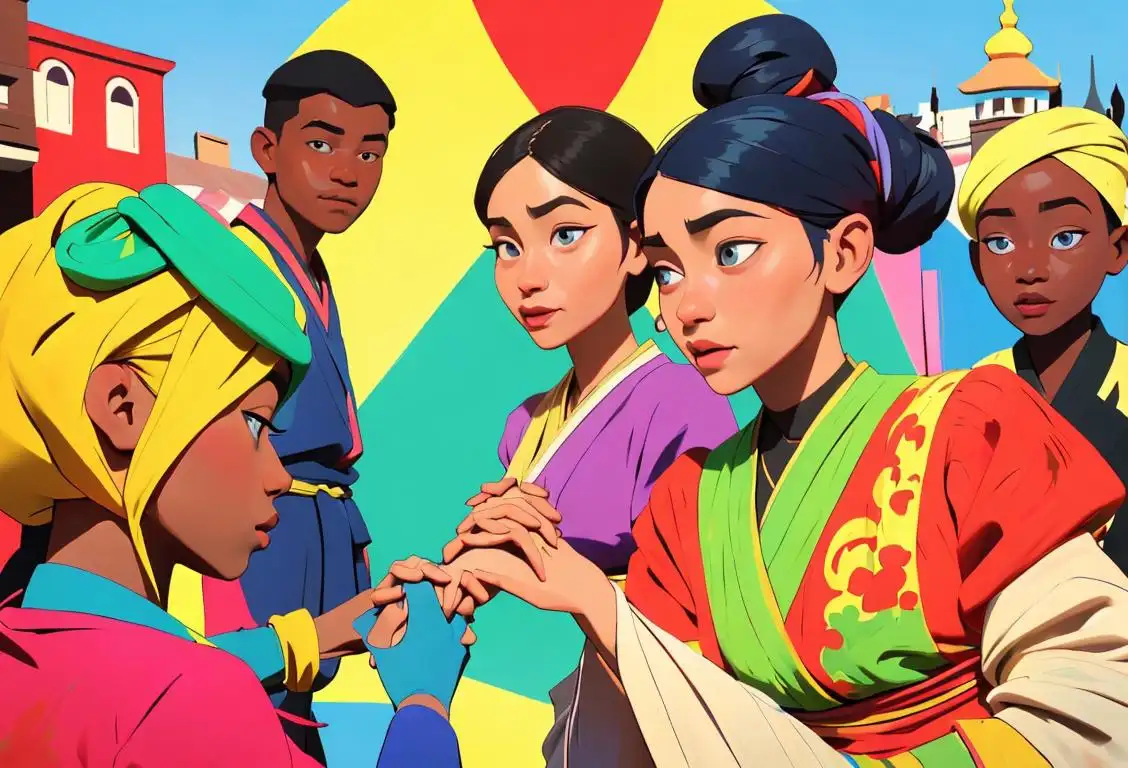
Welcome to the wild and wonderful world of National Multiculturalism Day! This day is all about celebrating the rich tapestry of cultures that make up our beautiful planet. So grab your passport, put on your dancing shoes, and get ready to explore the diverse traditions, cuisines, and customs that make life so darn interesting!
When is Multiculturalism Day?
It's national multiculturalism day on the 27th June.
A Melting Pot of Fun!
Picture this: it's National Multiculturalism Day, and people from all walks of life are coming together to celebrate their unique heritage. From savoring delicious dishes from around the world to experiencing vibrant music and dance performances, this day is a true celebration of unity in diversity. Whether you've got a penchant for spicy curry, a love for traditional dance forms, or an insatiable curiosity about different cultures, National Multiculturalism Day has something for everyone.
The Internet's Global Fiesta
What better way to celebrate the wonders of multiculturalism than through the power of the internet? Social media platforms explode with hashtags and photos showcasing people's colorful outfits, mouthwatering international cuisines, and heartwarming stories of cross-cultural friendships. It's like a digital world tour without the jet lag!
On this special day, take a moment to appreciate the advancements in technology that enable us to connect with people from different backgrounds and share in their experiences. Whether it's through video calls, online forums, or international meet-up groups, the internet has become our global meeting point, shrinking the distances between us and fostering a sense of unity.
A Global Tapestry of Traditions
As you dive deeper into the fascinating history of National Multiculturalism Day, you'll discover that it's not just about celebrating cultures from around the world. It's also about recognizing the contributions and achievements of multicultural communities within our own countries.
From street festivals to museum exhibitions, there are countless events held in cities and towns across the globe to showcase the incredible diversity within our societies. It's a time to learn from one another, challenge stereotypes, and build bridges of understanding.
The Day That Celebrates Us All
So, why is National Multiculturalism Day so important? Well, it's a reminder that we're all part of one big human family. Regardless of our ethnicity, religion, or nationality, we all have our unique stories and perspectives to share. This day encourages us to embrace our differences, celebrate our similarities, and strive for a more inclusive and harmonious world.
So, on this joyous occasion, let's come together and honor the vibrant tapestry of cultures that make our planet such an incredible place to live. Whether you're dancing the tango, sampling exotic delicacies, or simply sharing a smile with someone from a different background, every small act of multicultural celebration makes a big difference to our collective journey.
History behind the term 'Multiculturalism'
1957
Coined term
The term 'multiculturalism' was coined by the Canadian sociologist John Porter in his book 'Vertical Mosaic'. Porter used the term to describe the cultural diversity and ethnic pluralism in Canadian society.
1957
Emergence of the term 'multicultural'
The term 'multicultural' first emerged in the academic realm as an adjective to describe societies consisting of diverse cultural groups. It was coined in 1957 by the Canadian sociologist John Porter in his book 'Social Structure in Canada.' Porter used the term to highlight the ethnic and cultural diversity within Canada and the need for these diverse groups to coexist harmoniously.
1971
Official policy
Canada became one of the first countries to adopt multiculturalism as an official policy. The government recognized the unique cultural identities of its diverse populations and aimed to promote equality, social harmony, and the preservation of cultural heritage.
1960s-1970s
Rise of multicultural policies
During the 1960s and 1970s, many countries, particularly Canada and Australia, started to develop multicultural policies. These policies aimed to recognize and celebrate cultural diversity, promote equality, and counter discrimination. The adoption of multicultural policies marked a shift from assimilationist approaches that were prevalent at that time, which sought to assimilate immigrants into the dominant culture.
1984
Multiculturalism Act
In 1984, Canada enacted the Canadian Multiculturalism Act, which affirmed the country's commitment to multiculturalism and provided a legal framework to support cultural diversity. The Act aimed to strengthen intercultural understanding and foster a climate of inclusivity.
1971
Truth and Reconciliation Commission
In 1971, Canada established the Royal Commission on Bilingualism and Biculturalism, which later became the Royal Commission on Aboriginal Peoples. This commission aimed to address the mistreatment of Indigenous peoples and promote their rights and cultural preservation. This acknowledgment of the importance of Indigenous cultures within a multicultural framework marked a significant step towards a more inclusive understanding of multiculturalism.
1980s-1990s
Multiculturalism as a government policy
During the 1980s and 1990s, several countries, including Canada, Australia, and the United Kingdom, officially recognized multiculturalism as a government policy. These countries sought to integrate multiculturalism into their national identities and institutional frameworks. Government-funded initiatives were implemented to support cultural diversity, including funding for ethnic community organizations, language programs, and multicultural festivals.
1990
Global influence
The concept of multiculturalism gained international recognition and influence. It became a significant topic of discussion and policy development in various countries worldwide, including Australia, the United Kingdom, and the Netherlands.
21st century
Debate and challenges
Multiculturalism faced both support and skepticism in the 21st century. While some praised its positive impact on social cohesion and cultural exchange, others raised concerns about cultural fragmentation and perceived threats to national unity. The debate around multiculturalism continues to shape policies and community dialogue on diversity and inclusion.
2000s-present
Expansion of multicultural discourse
In the 2000s, the concept of multiculturalism saw further expansion and engaged in broader societal discussions. Issues such as cultural relativism, identity politics, and cultural rights gained prominence. Multiculturalism became a topic of political and public debates, with some questioning its effectiveness in promoting social cohesion and addressing issues of inequality. Nevertheless, multiculturalism remains a central aspect of contemporary societies, influencing policies, education, and social attitudes.
Did you know?
Did you know that National Multiculturalism Day is celebrated on June 27th each year? It all started back in 1971 when the United Nations declared this day as the International Day for the Elimination of Racial Discrimination. Since then, countries around the world have embraced the spirit of multiculturalism and each year, June 27th becomes a vibrant celebration of diversity.Tagged
romance awareness funFirst identified
7th June 2016Most mentioned on
27th June 2017Total mentions
18Other days
Suicide Prevention Month Day

Iloveyou Day

Happiness Day

Do Something Nice Day

Compliment Day

Single Ppl Day
Dance Day

Honesty Day

Kiss A Ginger Day

Kissing Fried Chicken Day