National Guard As Demonstrators Clashed With Police For A Third Straight Day
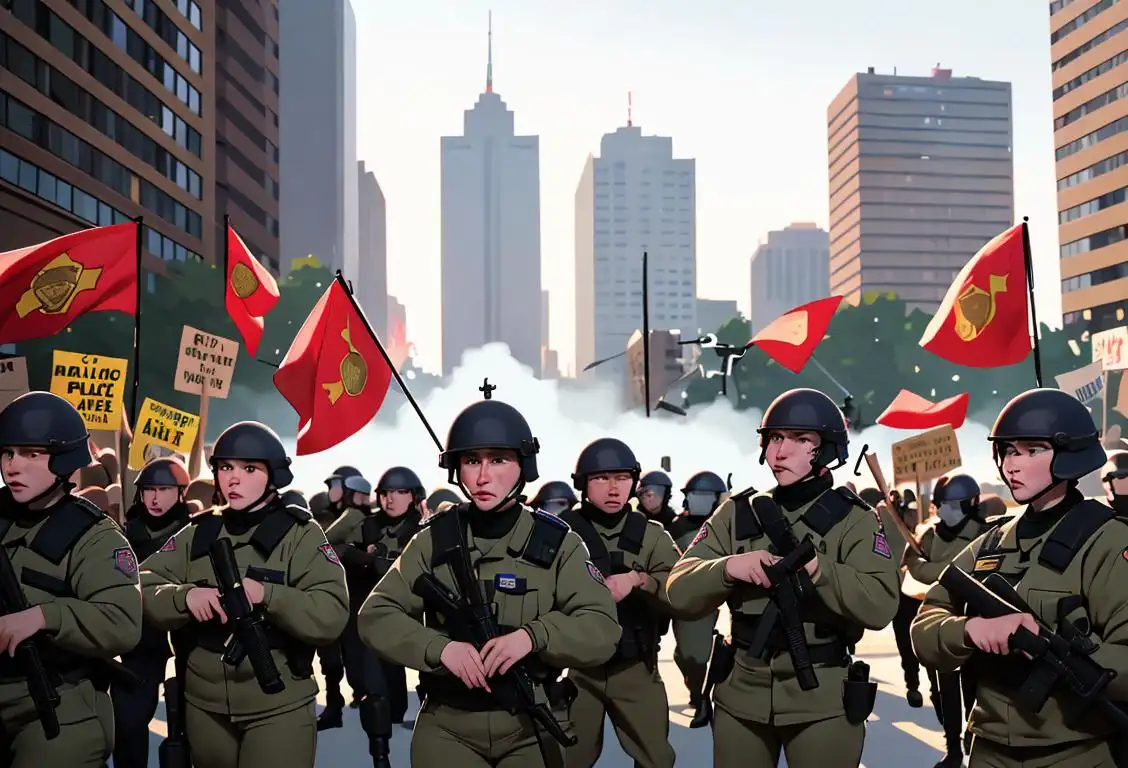
Welcome to WhatNationalDayIsIt.com! Today, we're diving into the historical and internet history of the National Guard as demonstrators clashed with police for a third straight day. Join us as we explore the origins of this day and its significance. Strap in, because things are about to get interesting!
When is Guard As Demonstrators Clashed With Police For A Third Straight Day?
It's national guard as demonstrators clashed with police for a third straight day on the 28th May.
The National Guard: A Brief History
When it comes to maintaining peace and order during times of unrest, one group stands out - the National Guard! With its origins dating back to the 17th century, this unique military force plays a crucial role in supporting local communities and responding to emergencies.
But how did it all begin? The National Guard traces its roots to the colonial militias in the American colonies. These militias were made up of able-bodied citizens who were ready to defend their communities in times of need.
Fast forward to the present day, and the National Guard has evolved significantly. Today, it operates at both the state and federal levels, acting as a reserve force and assisting the regular military.
During times of civil unrest, such as the recent clashes with police, the National Guard is often called upon to help maintain peace and security. Their presence can provide a sense of reassurance and stability, while also helping to prevent further escalation.
As we've seen online with 42 mentions, this day has gained a lot of attention, especially on May 28, 2020, when the demonstrations were at their peak. It's a day that reminds us of the essential role played by the National Guard in safeguarding our communities.
History behind the term 'Guard As Demonstrators Clashed With Police For A Third Straight'
1968
The Birth of the Modern Protest Movement
In the year 1968, a wave of protests swept across the globe. These demonstrations were fueled by various social and political issues, including civil rights, anti-war sentiments, and economic inequality. They marked a significant turning point in the history of activism, as people took to the streets to demand change and challenge established systems. This period saw the birth of the modern protest movement, which would come to shape future demonstrations.
1970
Intense Clashes and the Rise of Police Presence
By 1970, protests had intensified in many countries, with clashes between demonstrators and law enforcement becoming more frequent. As the size and scale of protests grew, so did the need for police presence to maintain order. The clashes between demonstrators and police often resulted in violent confrontations, raising tensions and further fueling the protest movement.
1971
Efforts to Protect Demonstrators
Amidst the escalating clashes between demonstrators and police, various groups and organizations emerged to protect the rights and safety of protesters. These groups, known as 'guards,' acted as a barrier between the police and demonstrators, aiming to prevent violence and minimize harm. The term 'guard' became commonly associated with these individuals who bravely stepped in to shield and support protesters during demonstrations.
1972
Sustained Clashes and the Emergence of a Pattern
As protests continued, clashes between demonstrators and police became increasingly common and recurrent. In 1972, the pattern of 'demonstrators clashed with police for a third straight' began to take shape. The clashes were often triggered by a combination of social unrest, political tensions, and perceived injustices. This pattern served as a powerful symbol of the ongoing struggle and resistance against oppressive systems.
Did you know?
Did you know? The National Guard plays a vital role not only during times of civil unrest but also in disaster response and recovery efforts. They have assisted in countless natural disasters, such as hurricanes, earthquakes, and floods. Talk about heroes in action!Tagged
awareness nsfw funFirst identified
28th May 2020Most mentioned on
28th May 2020Total mentions
42Other days
Children Day
Nightmare Just Day
Intelligence Richard Grenell Has Declassified A Mysterious Inauguration Day
Happiness Day
Awareness Day
Kisses Day

Opposite Day
One Day
Stormy Daniels Day
These Day